Mango pulp is a liquid product made from fresh, ripe mangoes as the main ingredient, processed through steps such as washing, peeling, pitting, pulping, and refining. It effectively retains the natural color, aroma, and flavor of mangoes, with a smooth texture and rich mango taste. Compared to fresh mangoes, mango pulp is more convenient to use, has stable quality, and is easier to store and transport. It effectively addresses problems such as the concentrated ripening period of mangoes, their poor storability, and high spoilage rates.
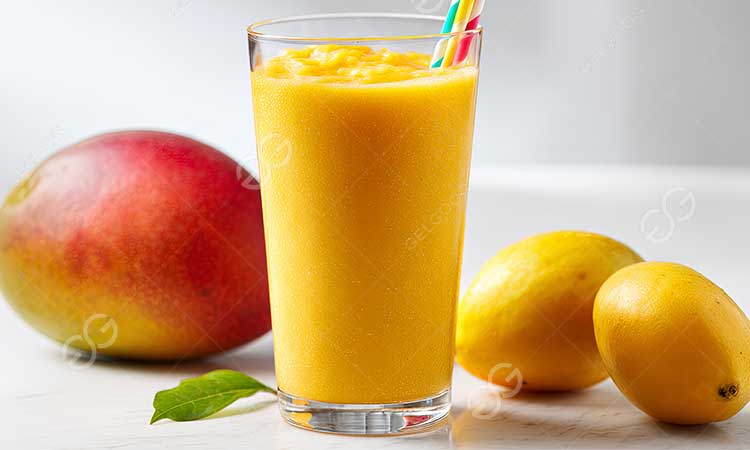
The main process for processing mangoes into mango pulp:
Processing mangoes into mango pulp generally utilizes continuous and standardized mango processing equipment to ensure stable product quality and food safety. The main process is as follows:
1. Raw Material Selection and Grading
High-quality, ripe mangoes are typically selected for processing into mango pulp. Mangoes that are rotten, moldy, or severely damaged must be discarded.
2. Cleaning
The selected mangoes need to be washed to remove impurities and ensure the raw materials are clean and hygienic.
3. Peeling and pitting
The washed mangoes then undergo the peeling and pitting process. Due to the large size of the mango pit and the abundance of fibers, it is recommended to use specialized equipment to complete this task in order to minimize mango loss.
4. Pulping
The fruit pulp is broken down into a fine, uniform pulp using a pulping machine. Pulping can be performed once or multiple times depending on product requirements to further reduce fiber content and improve the smoothness of the mango pulp.
5. Refining and Filtration
To obtain a smoother mango pulp, the pulp is usually refined or filtered after blending to remove any undissolved fibers and impurities.
6. Sterilization
Mango pulp is rich in sugar and water, making it highly susceptible to microbial growth. Therefore, sterilization is a crucial step in ensuring product safety and extending shelf life.
How to store mango pulp after processing:
The storage method of mango pulp is closely related to its sterilization method and packaging type. Proper storage conditions can effectively extend shelf life and maintain product quality.
Mango pulp that has undergone high-temperature sterilization and is packaged aseptically can be stored at room temperature for several months or even longer if unopened, making it suitable for long-distance transportation and long-term storage.Mango pulp processed using refrigeration or semi-sterilization methods should be stored in a refrigerated environment at 0–4℃ to inhibit microbial growth and extend its shelf life.