Ketchup is a unique, rich sauce made primarily from tomatoes, along with sugar, salt, vinegar, and a variety of seasonings. So how is ketchup made in factories? Generally speaking, there are two types of ketchup production: one is a full-process production using fresh tomatoes as the raw material; the other is a secondary processing method using concentrated tomato paste as a semi-finished product.
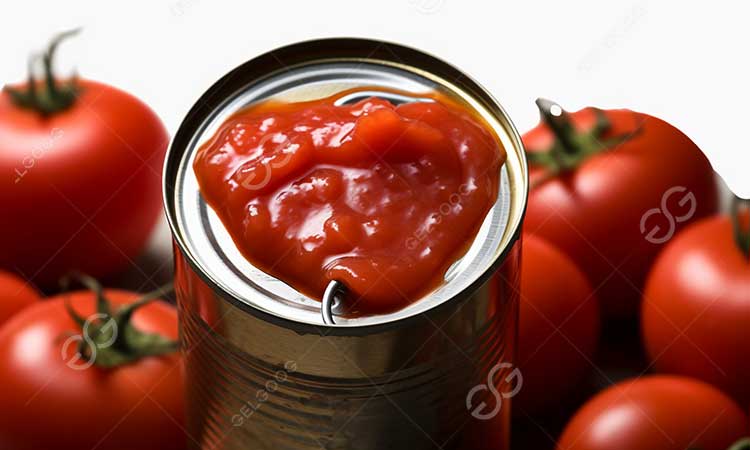
Fresh tomatoes as raw material
This processing method is typically more complex and includes the following:
- Raw material selection and cleaning: Tomatoes that are fully mature and free of pests and diseases are selected as raw materials. The tomatoes are then washed to remove any dirt and impurities from the surface.
- Crushing and preheating: The cleaned tomatoes are crushed in a crusher to form a tomato pulp. The pulp is then preheated in a heating device (approximately 85-95°C) to inactivate enzyme activity and prevent color and flavor changes.
- Pulping and Peeling: The tomato skins and seeds are separated through sieves of varying apertures, retaining only the fine tomato pulp.
- Concentration: The tomato pulp is evaporated and dehydrated in a vacuum concentrator to reduce the solids content to the required standard (typically 28-30%), resulting in a concentrated tomato paste.
- Mixing: Mix the concentrated tomato paste with sugar, salt, vinegar, starch, and other seasonings in appropriate proportions. Stir and homogenize to thoroughly blend the ingredients, creating a smooth, even tomato sauce.
- Pasteurization: The tomato sauce is pasteurized (generally at 85-95°C).
- Filling and Cooling: Common packaging formats include glass bottles, plastic bottles, and soft bags.
Using concentrated tomato paste as the raw material
This process is simpler and more efficient.
- Raw material preparation: Purchase high-solids tomato paste (typically 28–36° brix) from an upstream tomato processing plant and dilute as needed before use.
- Dilution and filtration: Add an appropriate amount of water to the concentrated tomato paste and dilute it in a mixing tank to adjust the solids content to the desired range for ketchup(approximately 20–25° brix). Filter to remove any impurities or lumps.
- Blending: Add sugar, salt, vinegar, starch, and other ingredients. Heat, stir, and homogenize to achieve a smooth and stable paste.
- The paste then undergoes pasteurization, bottling, and cooling, similar to the previous product process.
From processing fresh tomatoes to blending concentrated tomato paste, the modern ketchup production line is highly automated and standardized. Through precise recipe control, rigorous sterilization processes, and an efficient filling system, the factory ensures that every bottle of ketchup is vibrant red and has a delicate flavor.