Pomegranate juice is popular with consumers for its unique flavor, vibrant color, and rich antioxidants. So how to make pomegranate juice step by step? The main production steps of pomegranate juice include: washing, peeling, threshing, juicing, sterilization, and bottling. The production steps will be explained below:
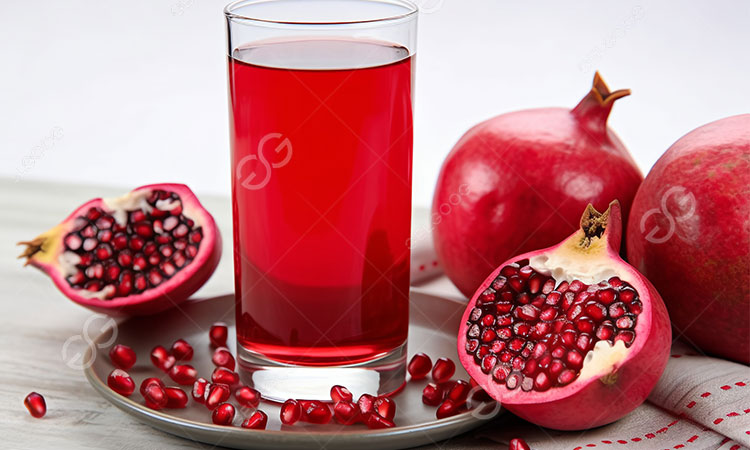
1. Washing and Threshing
After entering the factory, the pomegranates are first washed with a bubble washing machine or a spray washing machine to remove dirt and impurities, ensuring the hygiene of the raw materials. Then, a pomegranate threshing machine is used to separate the pomegranate seeds from the peel and diaphragm.
2. Juicing
Put the pomegranate seeds into a pomegranate juicer and press them. During juicing, control the pressing pressure to avoid crushing the seeds and producing a bitter taste. The extracted pomegranate juice needs to be filtered to remove pulp, making the juice clearer.
3. Sterilization:
The filtered pomegranate juice needs to be sterilized to extend its shelf life and ensure food safety.
4. Bottling:
After sterilization, the juice will be filled into different packaging forms. The entire filling process is carried out in a sterile environment to avoid secondary contamination.
Pomegranate Juice Processing Precautions:
To ensure product quality and safety, the following precautions should be taken during production:
1. Control juicing pressure: Pomegranate seeds contain bitter components. Excessive pressing pressure can crush the seeds, making the juice taste astringent. Therefore, equipment parameters need to be adjusted.
2. Keep equipment clean: Pomegranate juice is brightly colored and high in sugar, easily adhering to equipment surfaces. Regular cip cleaning is essential to prevent bacterial growth.3. Prevent oxidation: Pomegranate juice is rich in polyphenols, which easily oxidize and discolor upon contact with air. Air exposure should be minimized.