Description
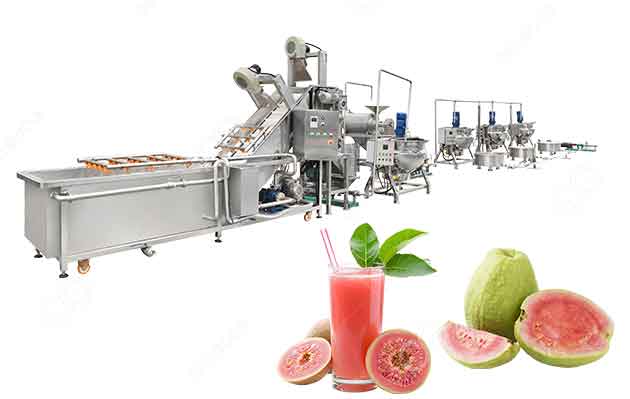
Guava is a highly popular fruit that can be processed into various products, such as guava pulp, guava juice, juice concentrate, guava nectar, and blended fruit juices. Guava pulp serves as an ingredient for beverages, dairy products, ice cream, jams, and other foods, whereas guava juice is better suited for direct bottling and retail sale, while also acting as a key base for blended juice products.
The guava juice production line is the primary equipment used for the large-scale, continuous processing of guavas. Through the strategic combination of various units, the system integrates stages such as raw material handling, pulp crushing, enzyme inactivation, juice extraction, refining, sterilization, and filling, transforming fresh guavas into standardized juice products suitable for sale and further processing.
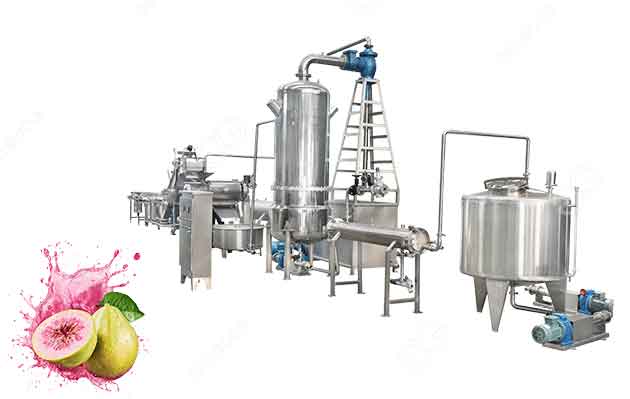
Main Processing Steps of Guava Juice Processing Plant:
1.Receiving and Sorting
Upon arrival at the factory, fresh guavas undergo raw material inspection and sorting. Personnel must remove fruit that is rotten, severely mechanically damaged, unripe, or of abnormal quality, while simultaneously performing a preliminary selection based on maturity, size, and appearance.
2. Washing
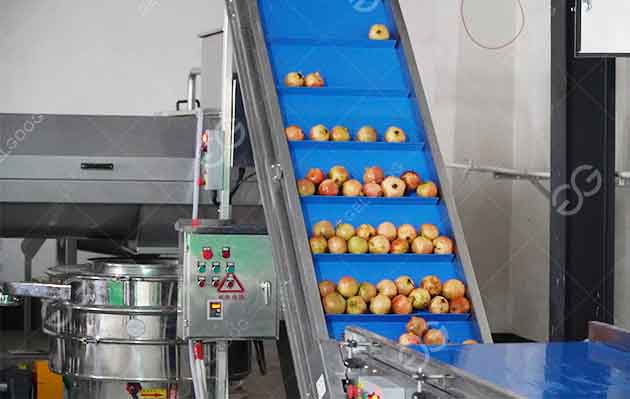
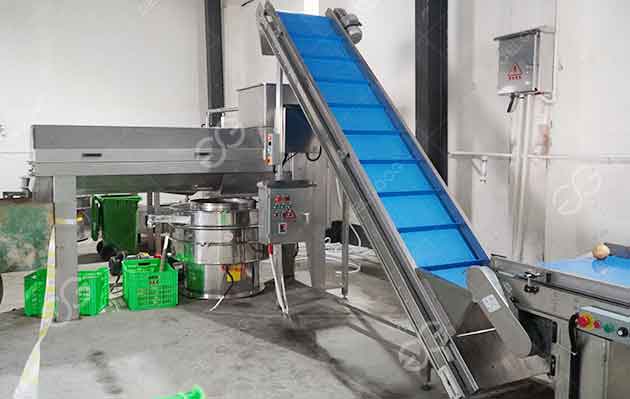
The sorted guavas enter the washing equipment, where surface impurities are removed through methods such as spraying and air-bubble agitation. For guava processing plants requiring continuous, long-term production, the washing equipment is typically integrated with a conveyor system to ensure the fruit can move continuously to the next stage of processing.
3.Crushing
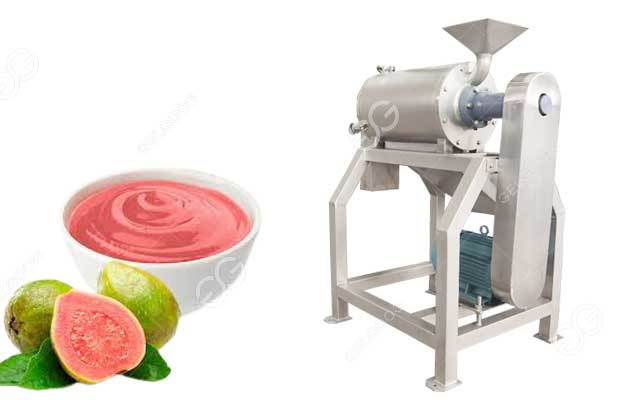
The primary purpose of crushing is to alter the structure of the whole fruit, facilitating the release of the pulp and enhancing the efficiency of subsequent juicing and pulping operations. The degree of crushing must be adjusted based on the ripeness of the guavas and the requirements of the final product to avoid over-processing, which could adversely affect the product’s texture and flavor.
4. Enzyme Inactivation
The comminuted material can be fed into a preheating system for appropriate heat treatment. A key objective of this step is to reduce the activity of relevant enzymes, thereby minimizing significant changes in color, flavor, and texture during processing. Additionally, proper preheating conditions facilitate the subsequent separation of the juice.
5. Juice Extraction and Refining
The pre-treated guavas enter the juice extraction or pulping system, where the juice is separated from the pulp, seeds, and some fibrous tissue. Subsequently, the juice undergoes further processing using screens, a refiner, or filtration equipment, selected based on the specific product requirements.
6. Pasteurization
This process reduces microbial risk by controlling temperature and duration, while minimizing the impact on the juice’s original flavor and nutritional properties. The pasteurization process must be tailored to the product type, packaging method, and subsequent storage conditions.
7. Filling, Cooling, and Packaging
Packaging is the final stage of the guava juice production line; filling can be carried out using bottles, pouches, cups, or other formats depending on market demand. Following filling, the product undergoes cooling, inspection, case packing, and warehousing in accordance with the packaging plan. For products intended for ambient-temperature sale, the overall system design must incorporate aseptic filling or an appropriate commercial sterilization process.
Features of the Guava Juice Production Line
- Customizable production process. Equipment configurations for refining, concentration, and filling can be adjusted based on the specific product—such as guava pulp, NFC juice, juice beverages, or juice concentrate—required by the client.
- High level of automation. Seamless, continuous operation is achieved across stages ranging from fruit conveying to washing, crushing, extraction, and sterilization; this minimizes manual handling and boosts operational efficiency. The guava juice processing plant capacity reaches up to 3 tons per hour.
- Superior hygienic design. All product-contact surfaces are made of food-grade stainless steel and feature an integrated CIP (Clean-in-Place) system, facilitating easy cleaning of pipelines and equipment after production.
Reviews
There are no reviews yet.