In the vegetable processing industry, vegetable washing machines are crucial pieces of equipment, widely used for cleaning leafy greens, root vegetables, and fruits. As the demand for food processing equipment grows, many customers have begun to ask: Can vegetable washing machines be used for oysters?
The answer is yes.
With appropriate equipment selection and parameter adjustments, certain vegetable washing machines can be used to wash oysters. These machines utilize methods such as water flow, air bubbles, or mechanical agitation to help remove mud, debris, and other matter adhering to the oyster shells. However, as oysters are shellfish, their shell structure, cleaning requirements, and tolerance to mechanical impact differ from those of vegetables; therefore, in practical application, the equipment configuration must be selected based on the oysters’ size, processing volume, and specific cleaning requirements.
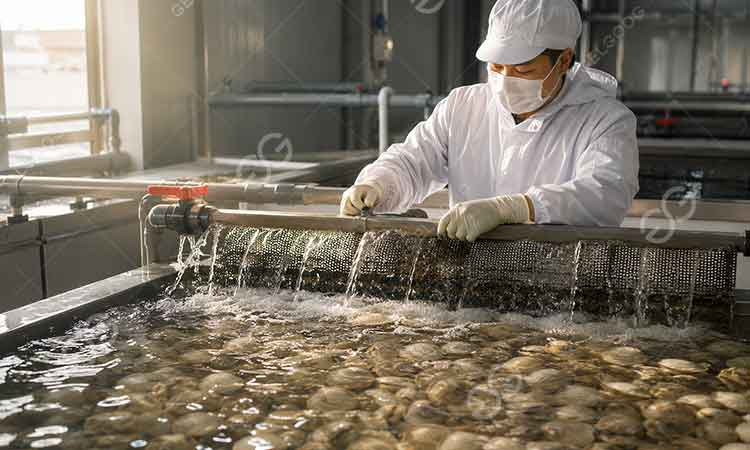
Why do oysters need to be washed?
Oysters grow in marine or other suitable aquatic environments, and their shells often accumulate mud, sand, algae, debris, and other impurities. Proper washing is a crucial step in the pre-processing workflow before oysters enter food service, food processing, or further handling stages.
1. Removing mud, sand, and impurities from the shell surface
Oyster shells typically have irregular surfaces with grooves and crevices that easily trap mud, sand, seaweed, and other external impurities. Manual scrubbing of individual oysters is not only time-consuming but also fails to meet the efficiency requirements of large-scale processing.
2. Preparing for subsequent processing
Washing serves as a preliminary step before further processing. Depending on the final product type, washed oysters may proceed to manual inspection, grading, shucking, meat extraction, or other processing stages.
It is important to note that washing the shell is not equivalent to internal purification of the oyster, nor does it guarantee the elimination of pathogenic microorganisms, viruses, or other food safety risks. Whether oysters require further purification, testing, or heat treatment should be determined based on the intended use of the product and applicable food safety regulations.
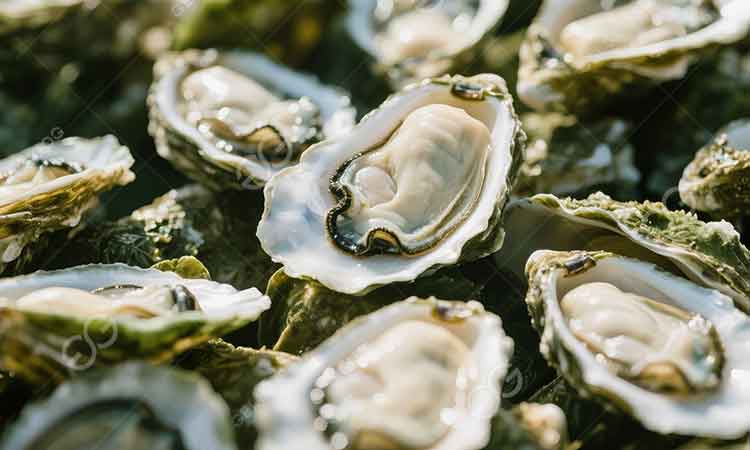
Can a vegetable washing machine be used for oysters?
Yes, some vegetable washing machines can be used to clean oysters, though not all models are suitable.
Conventional vegetable washing machines are primarily designed to remove soil, dust, and other impurities from the surface of vegetables. Depending on the equipment’s design, common cleaning methods include bubble washing and spray washing.
These cleaning principles can also be applied to the exterior cleaning of oysters in the shell; however, the equipment must be evaluated based on the specific characteristics of the oysters.
1. Bubble-type vegetable washing machine
Bubble washing machines introduce air into the water tank to generate continuous bubbles and water turbulence, helping to loosen mud, sand, and impurities from the surface of oyster shells.
Bubble washing is a suitable option for processing scenarios requiring batch cleaning while aiming to minimize intense mechanical friction.
Actual performance depends on bubble intensity, tank design, oyster load, and the level of surface contamination. For stubborn deposits lodged in shell crevices, supplementary pre-rinsing or other cleaning steps may still be required.
2. Spray-type cleaning equipment
Spray cleaning equipment uses nozzles to spray water onto the surface of the oysters, combining this with the action of brushes to help remove adhering mud, sand, and impurities.
The design should avoid excessive water pressure that could cause the oysters to collide, damage their shells, or create unnecessary splashing, while ensuring that all surfaces of the oysters are thoroughly rinsed.
3. Clarify the object to be washed: oysters in the shell or oyster meat
This is a crucial factor in the equipment selection process.
– Oysters in the shell: The focus is on removing mud, sand, and attached matter from the outer shell; this requires controlling mechanical impact while preserving the integrity of the oysters.
– Shucked oyster meat: The tissue is more delicate, imposing stricter requirements regarding water flow, conveying, and mechanical agitation. Standard vegetable washers may not be suitable; the cleaning method and hygienic design require specific evaluation.
Please note that standard washing machine should not be directly introduced into oyster processing operations without prior assessment. Proper equipment selection and process validation are essential to effectively balance cleaning efficiency, product quality, and food safety.