Description
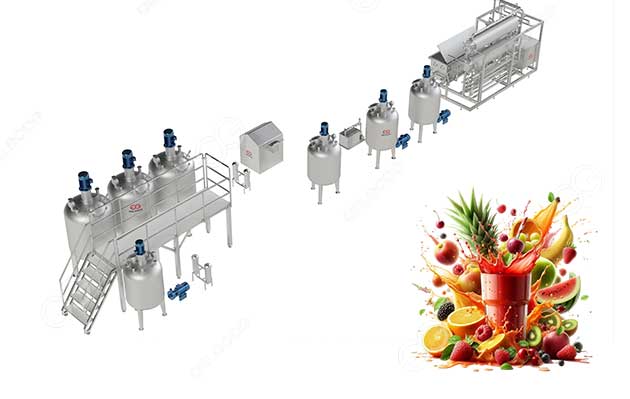
Fruit juice manufacturing machines are a complete industrial system that processes fresh fruit—through stages such as washing, crushing, extraction, filtration, homogenization, and sterilization—into juice products ready for direct bottling or for further concentration and blending.
Common juice factory equipment:
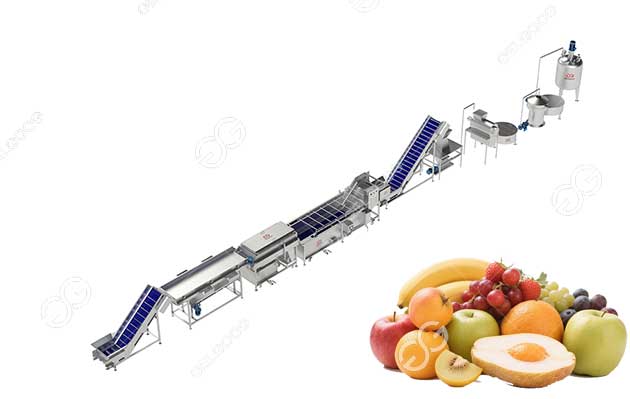
- Fruit Washing Machine
Once the fruit enters the production line, the first step is washing. The washing machine is primarily used to remove soil, pesticide residues, and other impurities from the fruit’s surface, while also minimizing contamination in subsequent processing stages.
Depending on the fruit’s shape and surface characteristics, methods such as bubble washing, spray washing, or brush washing may be employed. Washing equipment for standard industrial fruit juice production lines typically offers capacities ranging from 300 kg/h to 5 tons/h; specific specifications are determined based on the capacity of the entire production line.
- Fruit Crusher
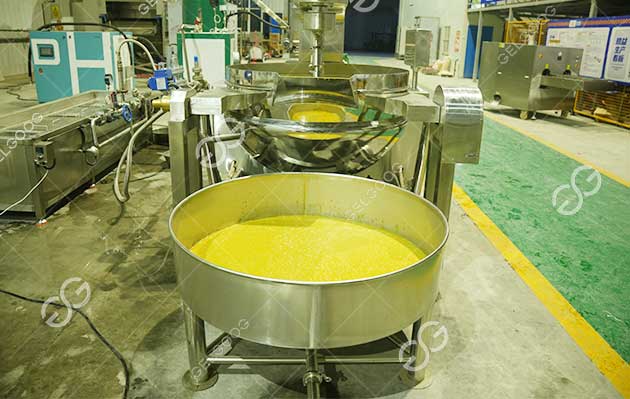
Some fruits require crushing before juicing to break down the pulp tissue and facilitate subsequent juice extraction. A crusher processes whole fruit into particles or a pulp consistency suitable for juicing.
Different fruits cannot simply be processed using the same crushing method. For instance, the particle size must be controlled for apples, whereas for soft fruits like mangoes and peaches, excessive crushing must be avoided to minimize pulp loss and unnecessary oxidation.
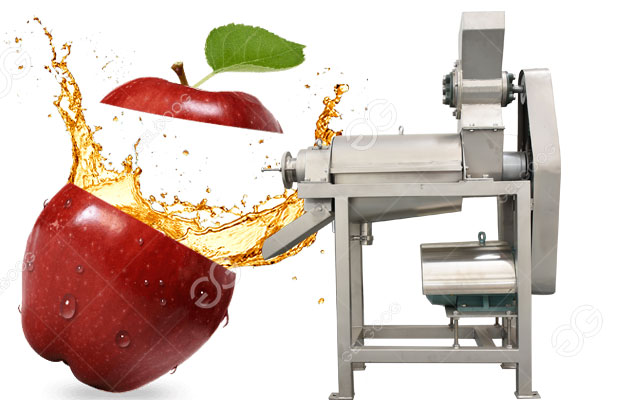
- Juicer
The juicer is a core piece of juice manufacturing machines in juice production, primarily responsible for separating the juice from solid components such as peels, seeds, and fibers.
Different raw materials require specific types of juicing equipment. Citrus fruits, apples, pineapples, and berries each have their own distinct juicing characteristics. Common capacities for industrial juicing equipment range from 200 kg/h, 500 kg/h, 1 t/h, 2 t/h, and 5 t/h to even higher levels; systems can be designed based on raw material supply and plant production capacity.
- Homogenizer
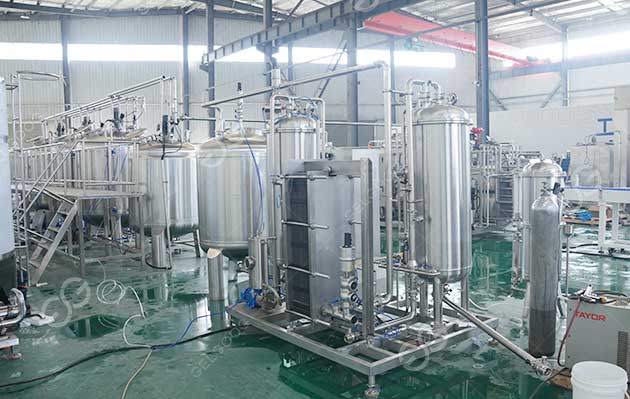
For fruit juices containing pulp, pectin, or fine suspended particles, homogenization is a crucial step in enhancing product stability. By utilizing high pressure, the homogenizer further reduces the size of particles within the juice and ensures their uniform dispersion, thereby minimizing noticeable separation or sedimentation during storage.
- Pasteurizer/Sterilizer
After processing, fruit juice typically requires sterilization to reduce microbiological risks and extend shelf life. Common methods include pasteurization and High-Temperature Short-Time (HTST) sterilization.
Sterilization temperatures and durations vary depending on the specific juice; factors such as fruit acidity, product formulation, packaging method, and target shelf life must all be taken into account.
How do you choose the right juice factory equipment?
If you are planning to set up a fruit juice processing plant, it is recommended to first determine the following basic information:
- First, identify the raw materials. Specify whether you will be using apples, mangoes, pineapples, oranges, pomegranates, or other fruits.
- Second, determine the final product. Different products—such as clarified juice, cloudy juice, fruit pulp, juice concentrate, or beverages containing fruit pieces—require different processing technologies.
- Third, determine the target production capacity—such as 500 kg/h, 1 t/h, 2 t/h, or 5 t/h—so that equipment specifications can be matched to actual production requirements.
- Fourth, assess facility conditions, including the factory floor area; the availability of water, electricity, steam, or gas; and storage requirements for raw materials and finished products.
For fruit juice projects, a well-balanced combination of juice manufacturing machines is more important than simply pursuing high capacity in a single machine. The processing capacities of the various units must be compatible; otherwise, issues such as insufficient upstream feeding or downstream equipment idling are likely to arise.
FAQ:
- Can you customize ajuice manufacturing machinesbased on my specific raw fruit?
Yes. Different fruits vary in terms of hardness, fiber content, pectin content, juice yield, and seed structure, so the required processing equipment differs accordingly. We will select the appropriate equipment and design a tailored juice production line solution based on your raw material type, processing method, target product, and production capacity.
- Can you provide equipment installation and commissioning services?
Yes. Depending on project requirements, we can provide technical services such as equipment installation, commissioning, and operational training to help customers familiarize themselves with production line operations and routine maintenance needs. The specific service arrangements can be determined based on the project location and the terms of the contract.
- What is the warranty period for the juice factory equipment?
The equipment typically comes with a one-year warranty. During the warranty period, should any issues arise due to manufacturing or assembly defects, we will provide appropriate technical support and solutions based on the specific circumstances. Wear parts and damage caused by improper operation are generally excluded from the standard warranty; the specific terms stipulated in the contract shall prevail.
Reviews
There are no reviews yet.